
Home EV Charger UK: Which Charging Option Fits Your Home
The fastest home charger isn’t automatically the best fit. For most UK homes with a single-phase supply, a 7kW or 7.4kW charger is the usual choice, so the best home EV charger in the UK in 2026 depends on how well it matches your electrical supply and charging needs. OCPP matters if you want the option to connect your charger with compatible charging management systems, but it isn’t the only factor to weigh.
Choosing a charger can feel like a balancing act between speed, compatibility and useful smart features. This guide compares the main options and explains how charging power, electrical supply, grant authorisation, smart charging rules and OCPP can shape your decision. You’ll come away with a practical way to narrow down the options for your home.
Table of Contents
What Is a Home EV Charger?
A dedicated charger connects your vehicle to your home’s electrical supply, while a 3-pin socket uses a standard household outlet. Compare the charging setup, installation needs and features against how you park and charge.
Dedicated Home Chargers
A dedicated wallbox is designed for regular home charging; a 3-pin plug is a simpler alternative but is generally better suited to occasional or slower charging. Most UK home wallboxes provide around 7 kW on a single-phase supply. Tethered models keep the cable and connector attached, whilst untethered units let you use a separate cable.
Renters and flat owners need to consider permission, parking access and whether the cable can reach their vehicle. For council tenants, the UK Government says charging cables must never run across pavements, even briefly. Without off-street parking, a home wallbox may not be practical.
Charger Prices and Features
Compare the total installed price, cable arrangement, smart controls, solar compatibility and warranty terms, rather than focusing on the unit alone. The cost depends on your property, cable route, mounting position and any electrical work required, so request a quote for the installation. A compact charger may suit a tight wall space; compare options such as Andersen by their stated features, not just their brand.
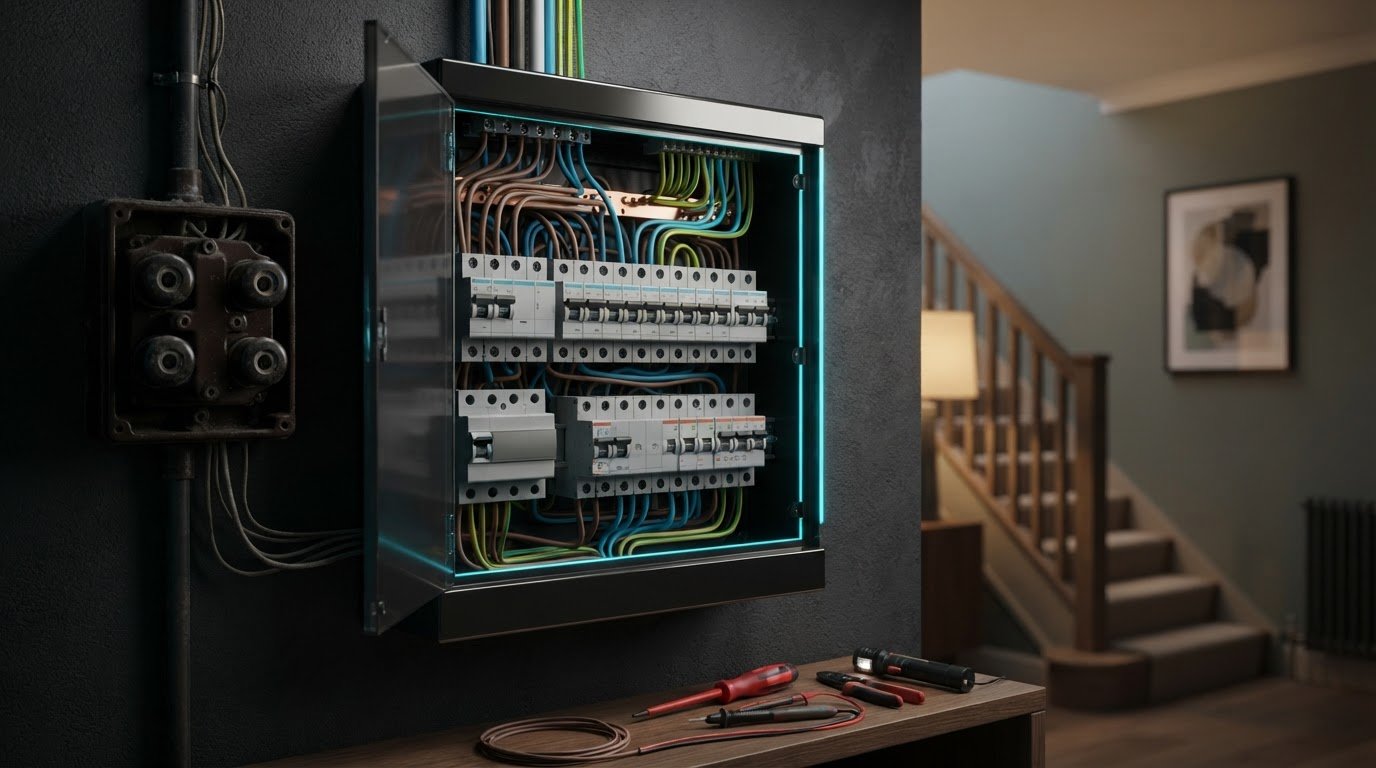
Installation involves assessing the electrical supply, fitting and connecting the charger, then testing it. A qualified electrician should carry out the work; UK installations must comply with BS 7671, the 18th Edition wiring regulations. In England and Wales, installations are notifiable under Part P of the Building Regulations. The time required depends on the property and installation work.
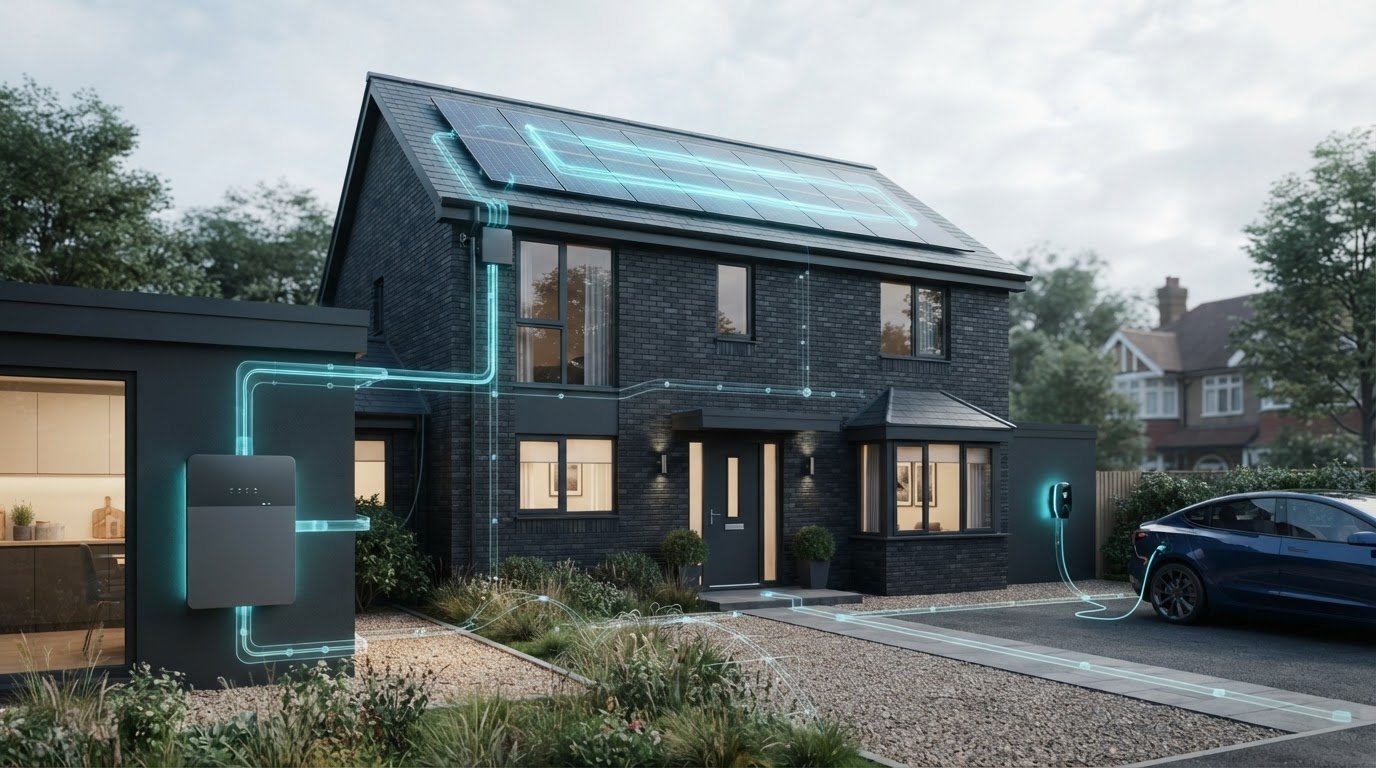
Solar panels can contribute to charging when the system and charger support it; compare how each model manages available solar energy.
UK grant authorisation and smart charging regulations
Smart charging can schedule your vehicle to charge during cheaper overnight periods if your energy tariff offers them. Compare each charger’s scheduling controls, connectivity and ability to work with your chosen tariff.
Since June 2022, new home and workplace chargers sold in Great Britain must be smart EV chargers under the Electric Vehicles (Smart Charge Points) Regulations. Smart charging compliance and grant authorisation are separate considerations: meeting the regulations does not, by itself, establish grant eligibility.
If you’re considering a grant-linked purchase, check the scheme’s authorisation and eligibility conditions. Treat these as separate from features such as app control, tariff scheduling or load balancing. Smart functions are useful when they support your household’s charging routine and energy arrangement.
Check how scheduling works with your tariff and vehicle. For example, set an overnight charging window to match the cheaper period, then consider whether the charger can adjust when household demand changes. Connectivity matters too: controls that rely on an internet connection may work differently from local settings.
Compare Rolec QUBEV Smart and Hypervolt by their documented smart functions, connectivity and tariff controls, rather than by name alone. Look for clear details on scheduling and load balancing, then consider how each option fits your routine. Don’t assume every model connects to every tariff or vehicle.
Safety rules still apply: UK EV charger installations must comply with BS 7671, the 18th Edition wiring regulations. In England and Wales, they are notifiable under Part P of the Building Regulations, and a qualified electrician should carry out the installation.
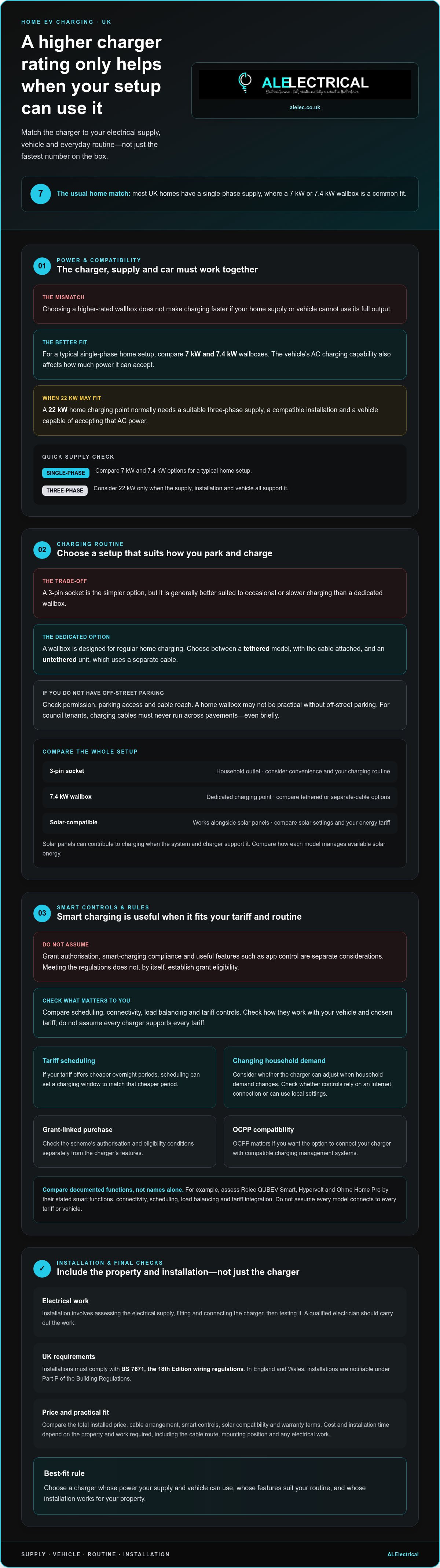
Typical UK home charging speeds and electrical supplies
Your electrical supply sets a practical limit on charger choice. Most UK home chargers use single-phase electricity and provide around 7 kW, making a 7 kW or 7.4 kW wallbox the usual match. The vehicle’s own AC charging capability also affects how much power it can accept.
A 22 kW home charging point normally needs a suitable three-phase supply, a compatible installation and a vehicle capable of accepting that AC power. Choosing a higher-rated wallbox alone won’t make charging faster if the supply or vehicle can’t use its full output. For most homes, the key decision is therefore matching charger rating to the existing supply and car.
Smart charging and load balancing can help coordinate charging with household electricity use. Compare how each charger manages load and whether its tariff integration suits your setup. If you prefer an untethered wallbox, include the separate cable in your comparison. You can assess models such as Ohme Home Pro by their stated functions and consider named energy providers such as Octopus when reviewing tariff integration. Don’t assume every charger supports every tariff.
Single-phase: compare 7 kW and 7.4 kW options for a typical home setup.
Three-phase: consider 22 kW only where the supply, installation and vehicle all support it.
Everyday fit: weigh smart charging, balancing and cable preference alongside rated power.
A premium wallbox isn’t automatically a better fit if its extra features don’t suit your electricity supply or routine. For help matching a charger to your home setup, explore EV charger installation.
ALElectrical: House Rewires
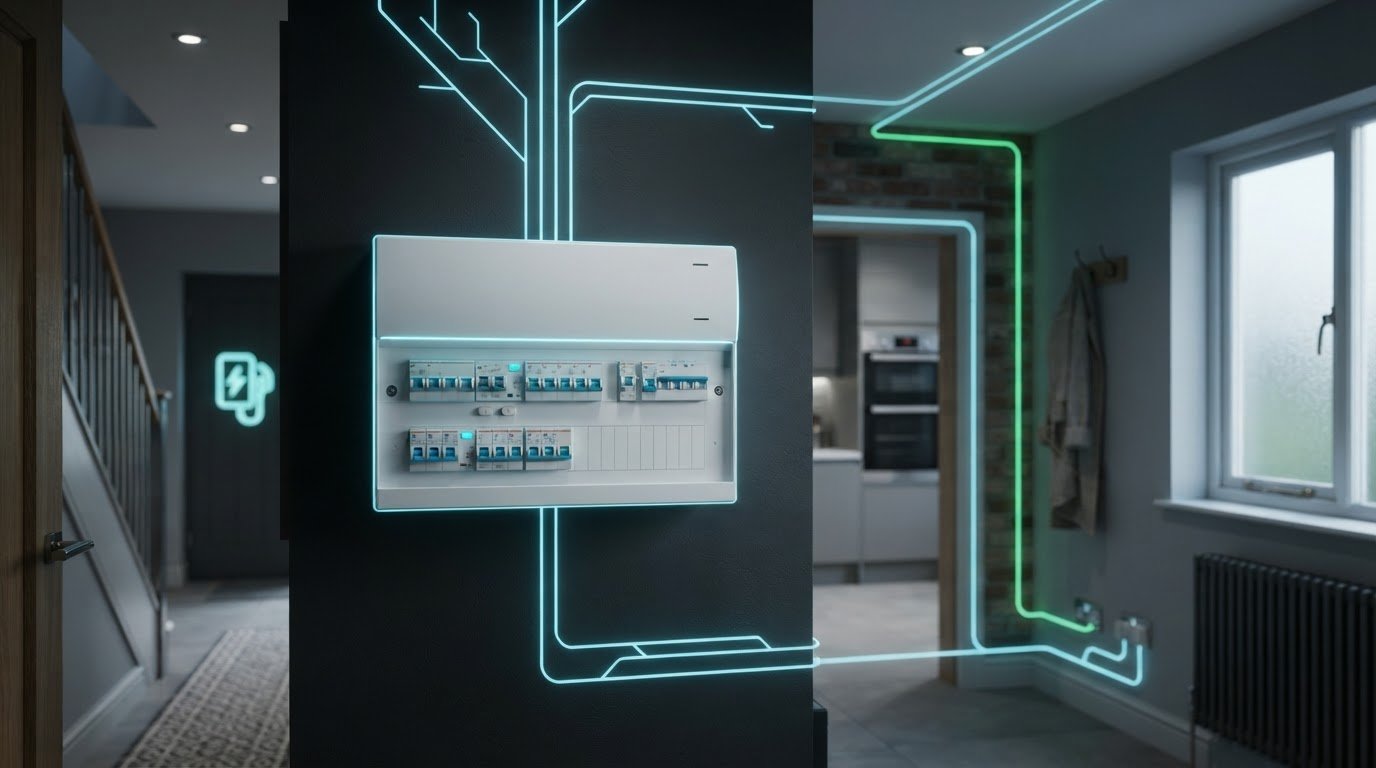
ALElectrical carries out house rewires for homeowners planning wider electrical work alongside a home charging setup. If existing wiring needs attention, a rewire may be relevant to the broader project; a fuse box upgrade or EICR may also address other electrical needs. The appropriate work depends on the property’s condition and requirements.
For households planning to use solar panels with an EV, ALElectrical offers Solar & Battery solutions. Considering the charger, electrical installation and energy setup together can help you plan how these parts fit your home, particularly if you’re already considering a renovation or new electrical project.
Contact ALElectrical to discuss your home’s electrical needs and the work you’re planning.
Plan your home charging around what comes next
Choosing the best home EV charger in the UK for 2026 is also a chance to think about how your home’s electrical needs may change. If you’re planning renovations, adding solar or updating older wiring, consider how those plans fit together before settling on a charging setup. A coordinated approach can help you make decisions with your property’s longer-term needs in mind.
ALElectrical offers house rewires, Solar & Battery solutions and fuse box upgrades, which may be relevant when broader electrical work forms part of your plans. The right next step depends on what you want to change at home and how those plans relate to charging your vehicle.
To discuss your requirements, contact ALElectrical about your charger. A considered plan can make your next move feel clearer and more manageable.
Frequently Asked Questions
Does OCPP matter?
OCPP matters if you want a charger to communicate with compatible charging management software. It can be useful when comparing systems that may change over time, but the label alone doesn’t show how well a particular setup will work. Check what the charger’s OCPP support enables and whether those functions suit your preferred app, energy arrangements and charging routine.
How do you choose an EV charger?
Choose a charger to suit your parking arrangement, vehicle and preferred controls. First, consider where the car will be parked and how its cable will reach. Then compare connector type, smart features, tariff controls, OCPP support and warranty terms. For example, a driver who parks in different positions may value cable flexibility more than a compact unit or additional software features.
What do owners think?
Owner feedback can offer insight into installation and day-to-day service, but one testimonial can’t represent every customer. Ian Mullinger described ALElectrical’s EV charger and outside socket installation as “fantastic”, “on time”, “helpful”, and “tidy”. Consider feedback on the installation experience alongside charger specifications, distinguishing the installer’s service from the equipment’s features.
Which EV Charger Is Best for Different UK Homes?
The best fit depends on your home’s parking and electrical setup. A house with a regular driveway can prioritise a convenient cable arrangement and charging controls. In a flat, shared parking or building arrangements may affect where a charger can go. Renters should consider permission and the likely length of their tenancy before choosing equipment or planning installation.
What are the best home EV chargers in the UK in 2026?
The best home EV charger in the UK in 2026 is the one whose documented features match your priorities. Compare models such as Rolec QUBEV Smart, Ohme Home Pro, Hypervolt and Andersen for charging controls, connectivity, cable arrangement and warranty terms. Rather than relying on a single overall ranking, shortlist by the features you’ll use and your home’s installation requirements.
Comments