
Flickering Lights When Using Appliances: Causes and Warning Signs
A brief flicker when a high-demand appliance starts can result from a short-term voltage drop, as the IET notes. Flickering lights when using appliances can also indicate a wiring or electricity-supply fault, especially if it keeps happening or affects several rooms. The flicker alone doesn’t prove that a circuit is overloaded.
It’s understandable to wonder whether a kettle, oven or heater is causing the problem and whether it’s harmless. This guide explains why appliance use can make lights dim or flicker, which warning signs need prompt attention, and how an electrician can investigate. You’ll also learn when the pattern may point beyond one appliance or circuit, helping you decide what to do next.
Table of Contents
What Can Cause Appliance-Triggered Flickering?
A brief flicker can happen when an appliance changes the electrical load. The pattern, including which lights are affected, can help narrow down the cause.
Appliance Faults and Circuit Checks
An appliance fault or circuit issue can make lights flicker as current demand changes. Note which appliance is running, whether the flicker affects one room, and whether it starts or continues during use. Kettles, electric heaters and ovens draw substantial current, but don’t usually have the motor-starting behaviour of motor-driven appliances. Don’t remove covers or attempt live voltage measurements unless you’re competent and properly equipped. Typical UK call-out and repair costs depend on the fault, access, parts and labour; the price is given after a quote request.
Flickering Throughout the House
If lights in several rooms flicker together when an appliance runs, the cause may be further upstream than one lighting circuit. It could involve the installation supply or an external voltage fluctuation, rather than a single faulty lamp. Note whether the effect is limited to one area or occurs throughout the property, and whether other appliances trigger it too. This pattern gives an electrician useful information when tracing the source.
Common Appliances and Voltage Drop
Kettles, electric heaters and ovens can cause a brief change in lighting because they draw substantial current. Motor-driven appliances can also produce a change when their motors start. There isn’t one useful voltage-drop figure to apply to every appliance and installation: the effect depends on the load and electrical conditions. A short dip differs from repeated or sustained flickering, so note when it starts and how long it lasts. In one reported case, switching on a high-demand appliance stopped the flickering for about 10 minutes, but that response alone doesn’t identify the cause.
Electrical warning signs requiring attention
Electrical Safety First advises that flickering lights shouldn’t simply be ignored, as they may indicate that the installation needs inspection. Notice what happens alongside the flicker: a change in the light alone is different from flickering accompanied by heat, noise or a burning smell.
Repeated flickering with any of these signs warrants prompt attention from an electrician:
A burning smell near a socket, switch or light fitting.
Sparking, crackling sounds, or sockets and switches that feel unusually hot.
Discolouration around an electrical fitting, or protective devices that trip repeatedly.
Sudden power loss affecting part or all of the property.
Stop using an appliance if it sparks or causes a burning smell. Note which appliance was running, where the flicker appeared, and whether a protective device tripped. These details can help an electrician understand the pattern without you opening fittings or attempting electrical tests.
Flickering across several circuits or throughout the house may point to an issue further upstream, including the installation supply or an external voltage problem. If lights dim or brighten in multiple rooms when an appliance runs, mention this wider pattern when arranging an assessment. One affected fitting calls for a different investigation from several circuits flickering together.
For recurring flicker or accompanying warning signs, arrange a professional electrical assessment rather than relying on repeated resets. Prompt attention helps identify whether the concern lies with an appliance, wiring or supply, and what should be examined next.
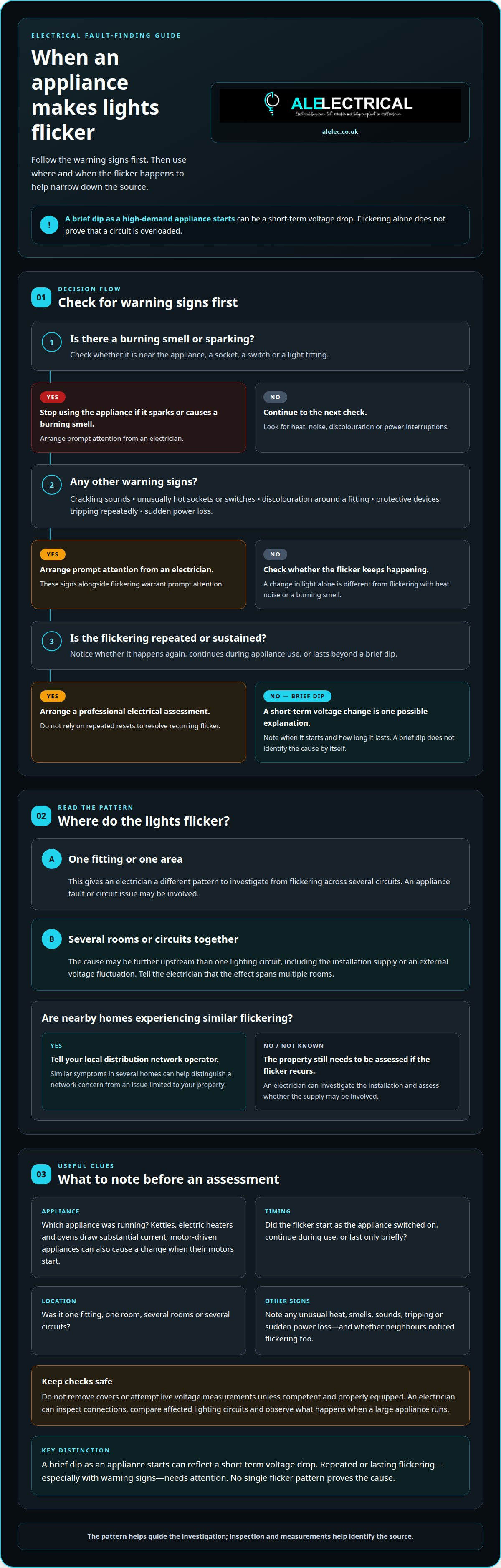
How Does an Electrician Find the Cause?
An electrician considers when the flicker occurs, where it appears and how it relates to appliance use. This helps distinguish an installation fault from a supply-network fluctuation.
Electricity Network Voltage Fluctuations
A network voltage fluctuation is a change in the electricity reaching a property and can affect lights on several circuits. UK Power Networks confirms that fluctuations can make lights dim, brighten or visibly flicker. If several homes nearby experience similar symptoms, tell your local distribution network operator. This shared pattern can help distinguish a network concern from an issue limited to your home.
Electrician Fault-Finding and Testing
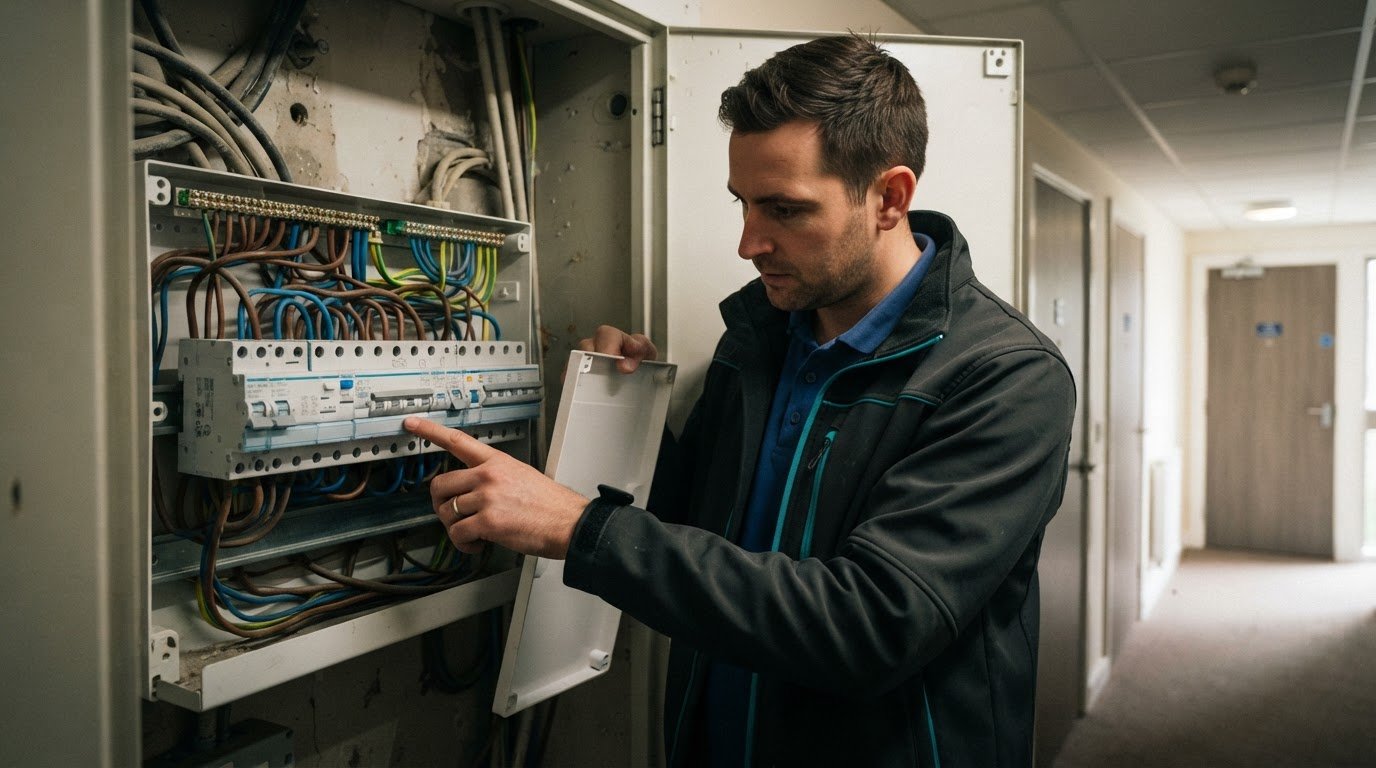
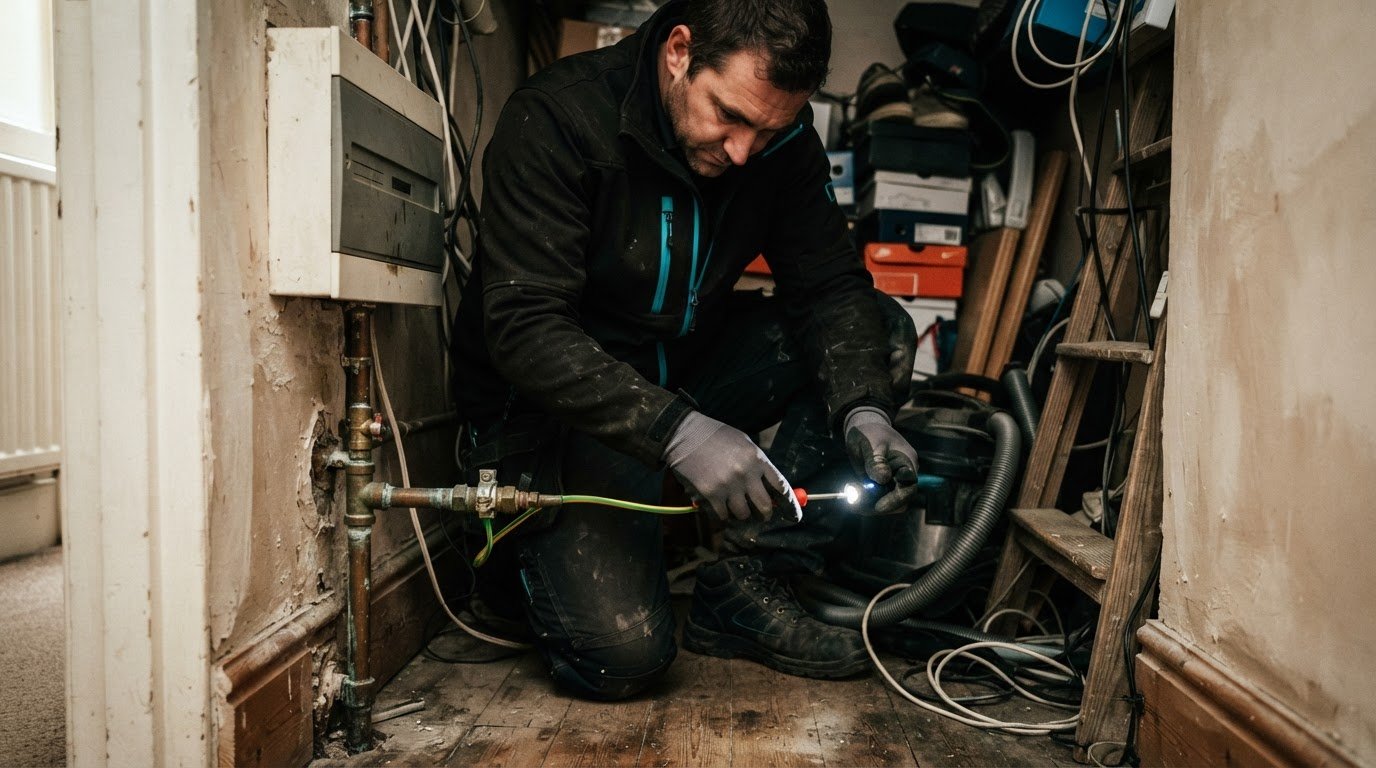
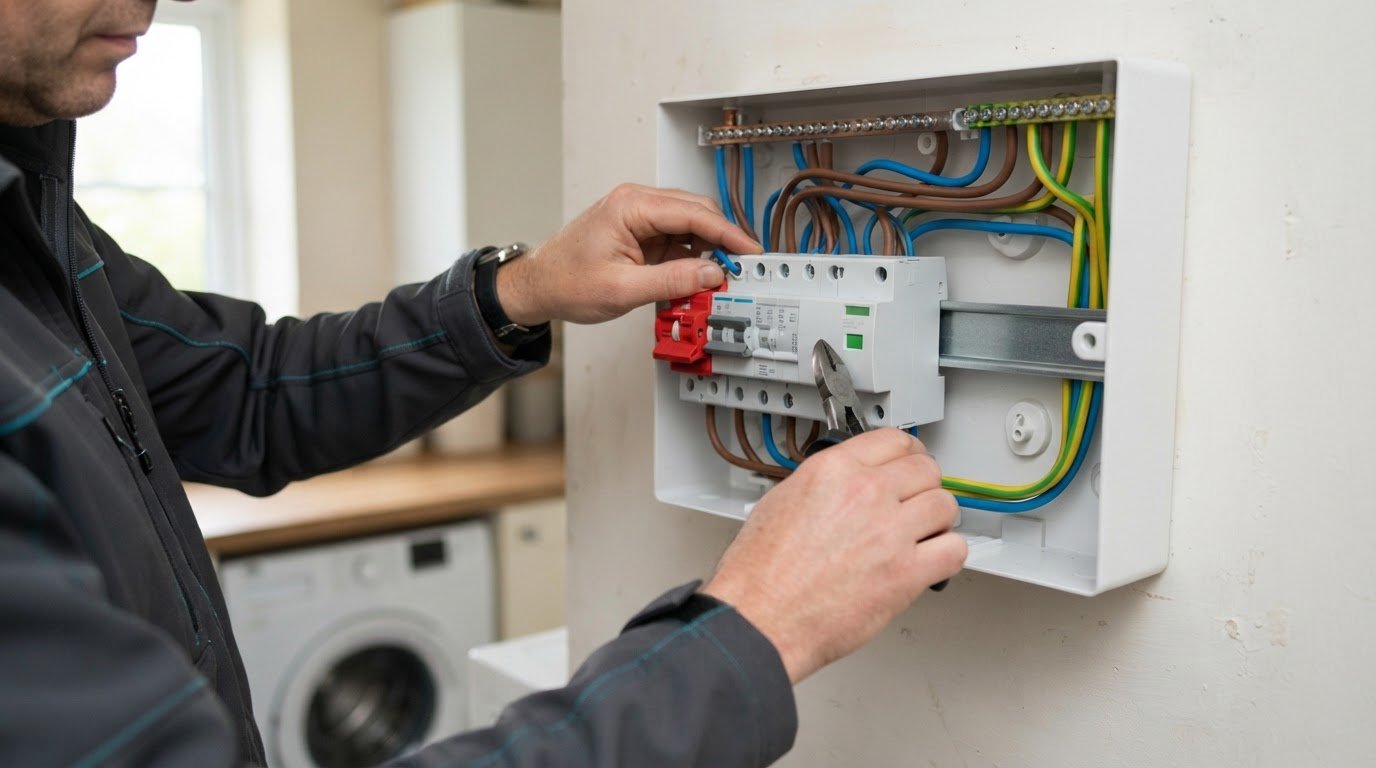
An electrician uses the flicker pattern to guide inspection and testing. They can compare affected lighting circuits, assess connections and observe what happens when a large appliance runs. The IET notes that switching on large loads can cause a short-term voltage drop within an installation. Flickering alone doesn’t prove a circuit is overloaded, so inspection and measurements matter.
Normal Power Surges and Electrical Faults
A brief dip as an appliance starts may reflect a short-term voltage change rather than a fault. Repeated or lasting flickering, especially alongside burning smells, sparks, hot fittings or tripping, needs prompt attention. No single flicker pattern proves the cause. An electrician considers its duration, the circuits affected and any other warning signs before identifying the likely source.
Reporting Power-Quality Problems
Responsibility depends on where the problem is found: inside the property or on the electricity network. Homeowners can arrange an electrician to assess the installation; tenants should report symptoms to their landlord. For suspected network fluctuations, contact the local distribution network operator through its official customer channel. Describe when the flickering occurs, which rooms are affected, what appliances are running and whether neighbours have noticed it. Don’t remove covers or attempt live voltage measurements.
ALElectrical: House Rewires
ALElectrical can help when an electrician’s findings point to an issue with your home’s electrical installation rather than an individual appliance or the wider network. An EICR can assess the installation, while a full rewire may be appropriate if the wiring needs replacing. If an inspection identifies a problem with the fuse box, an upgrade may be relevant.
These services address different findings, so the right next step depends on the inspection results. For example, recurring flicker linked to wiring needs a different response from a supply-network fluctuation. ALElectrical also provides electrical maintenance for electrical concerns that need attention.
For help with an installation issue, contact ALElectrical or visit alelec.co.uk.
Take a clear next step for your home
Flickering lights when using appliances can be a useful prompt to include your electrical installation in future home maintenance plans. Instead of treating each episode as an isolated annoyance, use the electrician’s findings to understand what needs attention and what can be planned. A written assessment can help you make informed decisions about future electrical work and explain the issue clearly if it returns.
If you’d like to discuss the findings and possible next steps, contact ALElectrical for help. A professional assessment can turn uncertainty into a practical plan for your property, whether action is needed now or you want a clearer understanding of your installation. Taking a considered step towards resolving the issue can help you feel more confident about your home’s electrical safety.
Frequently Asked Questions
Do lights flicker whenever an appliance is used?
No. A brief dip may happen with a high-demand appliance, but repeated flickering whenever a particular appliance runs deserves investigation. If flickering lights when using appliances occur only with one device, note whether they start at switch-on or continue during use. Compare the pattern with another appliance, without opening fittings or carrying out electrical tests.
What can you check safely?
Keep a simple record of the appliance, room, timing and duration of each episode. Note whether the same lights flicker with another appliance and whether neighbours notice similar changes. Don’t remove covers or attempt live voltage measurements unless you’re competent and properly equipped. These observations can help an electrician understand the issue without you handling electrical components.
What does the flickering pattern tell you?
A flicker limited to one fitting gives an electrician a different starting point from lights changing across several rooms. Note whether the brightness dips, rises or varies, and whether this happens only while one appliance operates. This record helps you describe the issue clearly, but the pattern alone can’t confirm whether the cause is the appliance, installation or supply.
When should flickering lights be treated more seriously?
Arrange prompt electrical attention if flickering comes with a burning smell, sparks, crackling, unusually hot or discoloured sockets or switches, repeated tripping, or sudden power loss. Stop using an appliance that appears connected to these signs. Avoid touching a hot or damaged fitting, and tell the electrician what happened and where.
Why can switching an appliance affect the lights?
Starting or running an appliance changes the electrical load in the installation. A high-demand appliance can briefly lower voltage, while a motor-driven appliance has a distinct starting demand. If flickering lights when using appliances persist or keep returning, an electrician can assess the installation and identify the cause. Flickering alone doesn’t establish that a circuit is overloaded.
Comments