
Buzzing Consumer Unit: Causes and Signs of Overheating
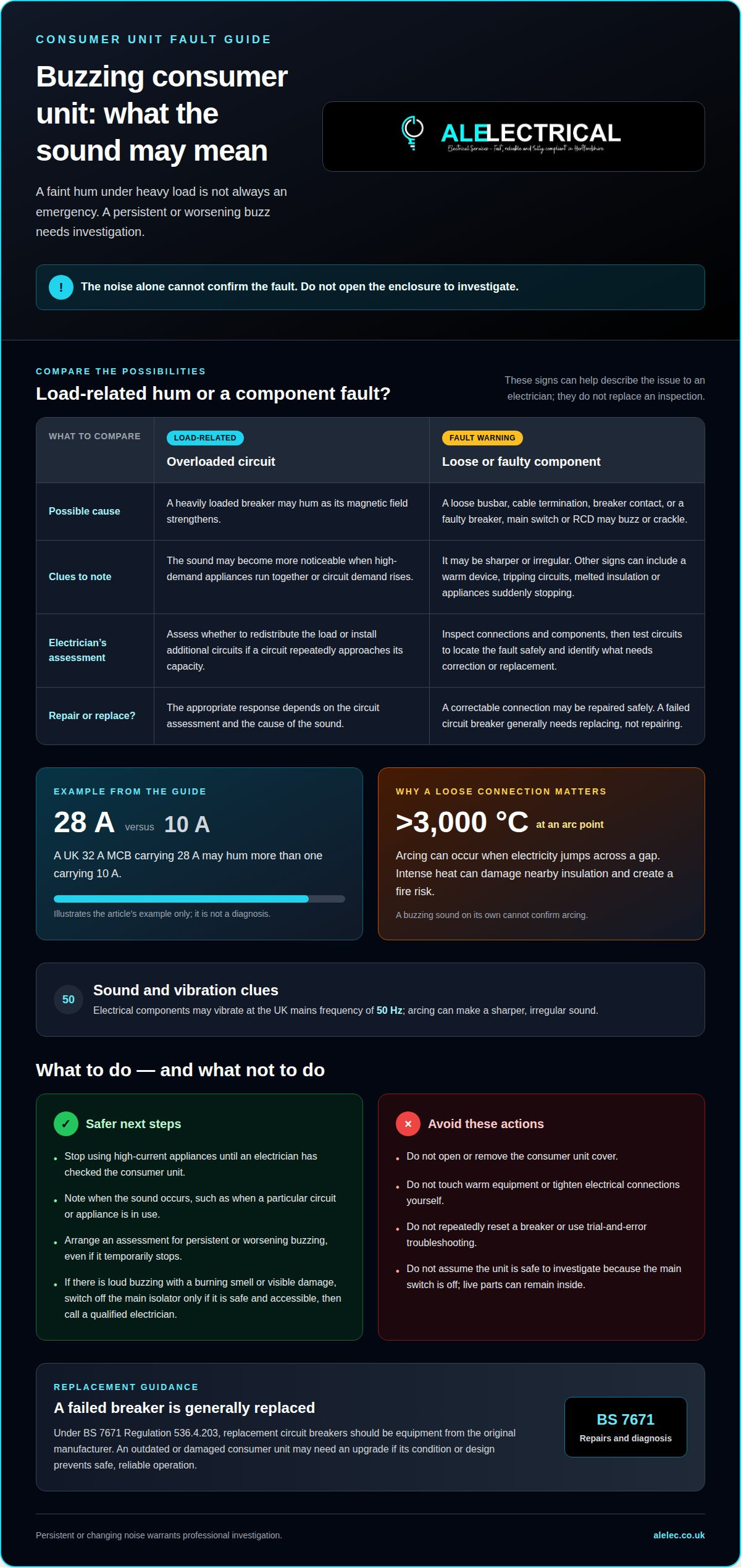
A buzzing sound from a consumer unit can be caused by a loose connection, an overloaded circuit breaker or a faulty safety device. A faint hum under heavy electrical load isn’t always an emergency, but persistent or growing noise can signal overheating and needs investigation. A failed circuit breaker generally needs replacing rather than repairing.
It’s understandable to be concerned when your fuse box makes an unfamiliar noise. This guide explains how a loose busbar connection can cause arcing and heat, which warning signs to watch for, and how an electrician can identify the fault. It also explains why you shouldn’t open the consumer unit or tighten connections yourself, and how the cause determines whether a connection can be corrected or a component needs replacing.
Table of Contents
Loose busbar connections and overheating
A loose busbar connection can make electrical contact unstable inside a consumer unit. If the buzzing persists or grows louder, overheating may be developing and the fault needs attention.
Busbar overheating
A busbar distributes electricity between protective devices, including circuit breakers, inside the consumer unit. If its connection is loose, electrical resistance can increase at that point and create heat, particularly when circuits are under load. The buzzing may become more noticeable as demand rises. Heat can damage insulation and nearby components, increasing the risk of further faults. A faint hum under heavy load isn’t always an emergency, but don’t treat a changing or persistent noise as normal.
Arcing at loose connections
Arcing occurs when electricity jumps across a gap between electrical connections. A loose busbar or cable termination can create that gap, producing a sharper buzz or fizz as the connection carries current. At the arc point, temperatures can exceed 3,000 °C. That intense heat can damage surrounding insulation and create a fire risk, even if the sound comes and goes. The noise alone can’t confirm arcing, but a buzzing sound from a consumer unit warrants investigation rather than opening the enclosure to look for it.
Consumer unit connection faults
Loose connections in a consumer unit can affect a busbar, cable termination or the contact between a breaker and the busbar. Electrical components may vibrate at the UK mains frequency of 50 Hz, while arcing can create a sharper, irregular sound. Other warning signs include tripping circuits, melted insulation or appliances suddenly stopping. UK consumer-unit repairs should be diagnosed and carried out in line with BS 7671. Anyone who isn’t competent should not investigate the wiring or tighten connections themselves, because live parts can remain inside even when the main switch is off. An electrician can inspect connections and identify the source of the fault safely.
7.3) Can a buzzing circuit breaker be repaired?
If the unit buzzes loudly and there’s a burning smell or visible damage, switch off the main isolator if it’s safe and accessible, then call a qualified electrician. Don’t touch the unit, remove its cover or try to tighten connections.
Overloaded circuits
An overloaded circuit carries more current than its wiring or protective device is designed to handle. A heavily loaded breaker can hum as its magnetic field strengthens; for example, a UK 32 A MCB carrying 28 A may hum more than one carrying 10 A. If a circuit repeatedly approaches its capacity, an electrician can assess whether to redistribute the load or install additional circuits. Don’t ignore buzzing that grows louder when high-demand appliances run together.
Faulty breakers, main switches and RCDs
A faulty breaker, main switch or RCD may buzz or crackle, and the device may feel warm. These warning signs can indicate a component fault, rather than simply a circuit carrying a heavy load. Note when the sound occurs, such as when a particular circuit is in use, but don’t touch warm equipment. A qualified electrician can test the installation and identify whether a protective device or another component is at fault.
Breaker and consumer unit replacement
A circuit breaker that has failed is generally replaced, rather than repaired. Under BS 7671 Regulation 536.4.203, replacement circuit breakers should be equipment from the original manufacturer. The electrician assesses whether the fault is limited to one device or whether the consumer unit itself is outdated or damaged. A unit upgrade may be appropriate when its condition or design prevents safe, reliable operation.
Immediate steps for a buzzing unit
Stop using high-current appliances until an electrician has checked the consumer unit. If there’s no burning smell or visible damage, leave the unit closed and arrange an assessment. If you can safely identify the affected circuit without touching the enclosure, avoid using it; don’t repeatedly reset a breaker. A burning smell, visible damage or loud buzzing calls for prompt attention, not trial-and-error troubleshooting.
Why Is My Consumer Unit Making a Buzzing Sound?
A fuse box may hum because of a loose termination, an overloaded circuit or a failing device. The volume and persistence of the noise, along with any other warning signs, can help indicate how urgently it needs attention.
Investigating and repairing the buzzing
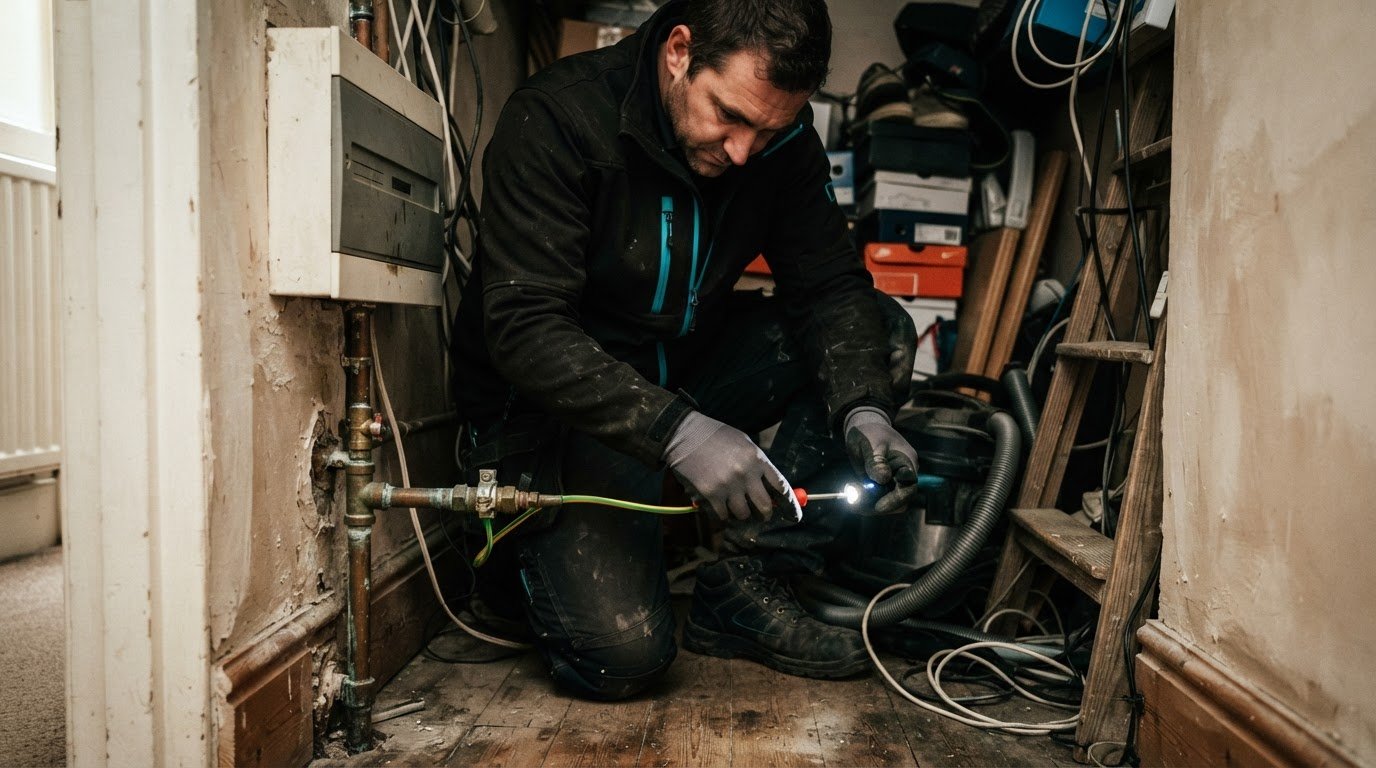
A qualified electrician investigates the sound by inspecting connections and components, then testing circuits to locate the fault. Note whether the humming changes when appliances run or lights are switched on, but don’t remove the consumer unit cover. A persistent or worsening buzz is a warning sign, even if it stops temporarily. Electrical faults should be diagnosed and repaired in line with BS 7671 regulations.
Repair or replacement
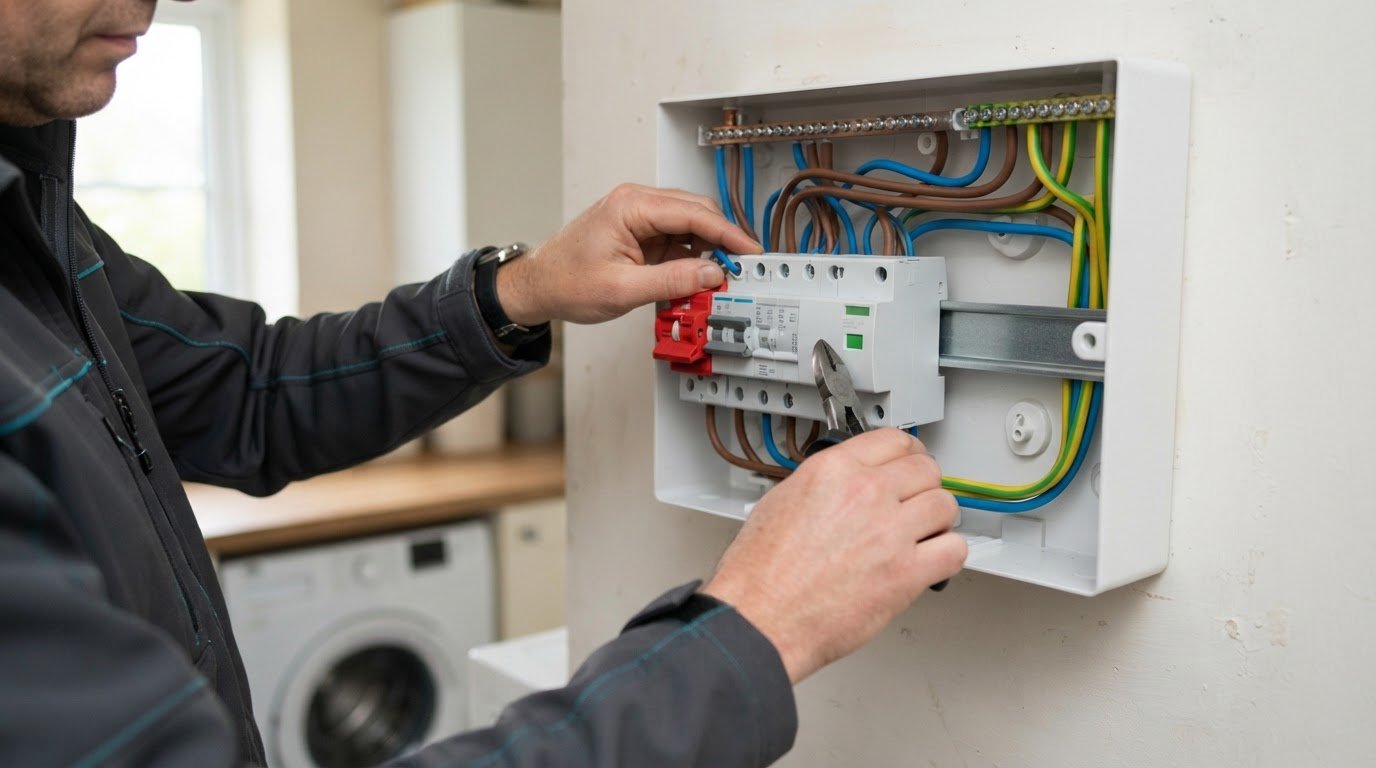
Repair is appropriate when inspection identifies a fault that can be corrected safely, such as a loose connection or a damaged component. A failed circuit breaker generally needs replacement, while an outdated or damaged fuse box may need a full consumer-unit upgrade. Inspection and repair costs depend on the fault, parts needed and work involved; the price is given after a quote request.
Safety concerns and electrician call-outs
Yes, a buzzing consumer unit can signal overheating or arcing, so treat persistent noise seriously. Call an electrician promptly if the buzz grows louder, circuits trip, lights behave unusually, or you notice heat, damage or a burning smell. If the unit buzzes loudly and there’s visible damage or a burning smell, switch off the main isolator only if it’s safe and accessible.
To find a suitable electrician in the UK, look for a qualified professional who is registered with a competent-person scheme, such as NICEIC, or is Part P approved. For an inspection or repair, arrange electrical maintenance.
ALElectrical
ALElectrical provides electrical maintenance to help address concerns about a noisy consumer unit. An inspection can help identify whether the sound relates to a connection, circuit or protective device, and establish what work is appropriate. If an outdated unit needs replacing, ALElectrical can carry out a fuse box upgrade. An EICR can also assess the installation’s condition and highlight electrical issues that need attention. The right response depends on the fault, so don’t open the unit or attempt repairs yourself. If the buzzing persists, worsens or comes with a burning smell, contact ALElectrical to discuss the problem.
Plan your next electrical step with confidence
A new electrical fault can also be a reason to review whether your installation suits your home’s needs. Once the cause is clear, you can consider any wider work in context rather than treating each change in isolation. A buzzing sound from a consumer unit is a reason to pause before planning further electrical alterations, not to assume the whole installation needs replacing.
If you’re considering a house rewire, solar and battery work, or a fuse box upgrade, the condition of your existing installation can help shape the next step. ALElectrical can assess the immediate concern alongside your wider plans, giving you a practical basis for deciding what work is relevant to your home.
Contact ALElectrical for expert help and take the next step towards a safer, clearer plan for your electrical work.
Frequently Asked Questions
What are the Causes for a Fuse box Buzzing Noise?
Common causes include a loose cable termination or busbar connection, an overloaded miniature circuit breaker, or a faulty protective device. The noise may change with demand, for example, when a washing machine and tumble dryer run together. Sound alone can’t identify the fault. Note when the noise occurs and which appliances are running, then share that information with an electrician.
What Causes Electrical Buzzing Sounds in Your Home?
Buzzing can come from an appliance, dimmer switch, doorbell transformer or consumer unit. To check whether an appliance is responsible, unplug it and listen to see if the noise stops, provided it’s safe to do so. Have an electrician check a loud doorbell transformer. If the sound comes from the electricity meter, contact your electricity supplier.
What causes a buzzing sound from a consumer unit or fuse box?
A buzzing sound from a consumer unit may come from a loose termination, an overloaded breaker or a failing safety device. The location and timing can help distinguish it from noise elsewhere in the home. If the sound seems to come from the fuse box and changes with circuit demand, describe that pattern to an electrician. Don’t remove the cover to investigate.
Can a loose connection or faulty circuit breaker cause buzzing in a consumer unit?
Yes. A loose connection can cause arcing, while a faulty breaker can buzz or crackle; a failed breaker generally needs replacing. Arcing can also affect sockets, and a loose connection may coincide with appliances unexpectedly stopping. Don’t assume the noise proves a particular fault. An electrician can inspect the equipment and determine whether the connection or breaker is responsible.
Can an RCD, RCBO, or main switch buzz normally?
A new or persistent buzz from an RCD, RCBO or main switch shouldn’t be assumed to be normal. Protective devices can vibrate, but buzzing or crackling may also indicate a fault, especially if a device feels warm or circuits trip. Don’t touch or open the consumer unit to check. Arrange an electrician’s assessment and describe which device seems to be making the noise.

Comments