
Add a Battery to Existing Solar Panels: What You Need to Know
Your solar panels don’t necessarily need replacing to add battery storage. If you’re wondering whether you can add a battery to your existing solar panels, the answer is yes in many cases, although the right setup depends on your inverter and existing system. An AC-coupled battery can work alongside an existing inverter, while a compatible hybrid inverter can manage both the panels and battery.
It makes sense to want to use more of the electricity your panels generate, rather than export it when your home could use it later. This guide explains how a battery stores and supplies solar electricity, and compares AC-coupled batteries with hybrid inverters for existing systems. You’ll also learn what affects compatibility, so you can understand the options before deciding what suits your home.
Table of Contents
What is home battery storage?
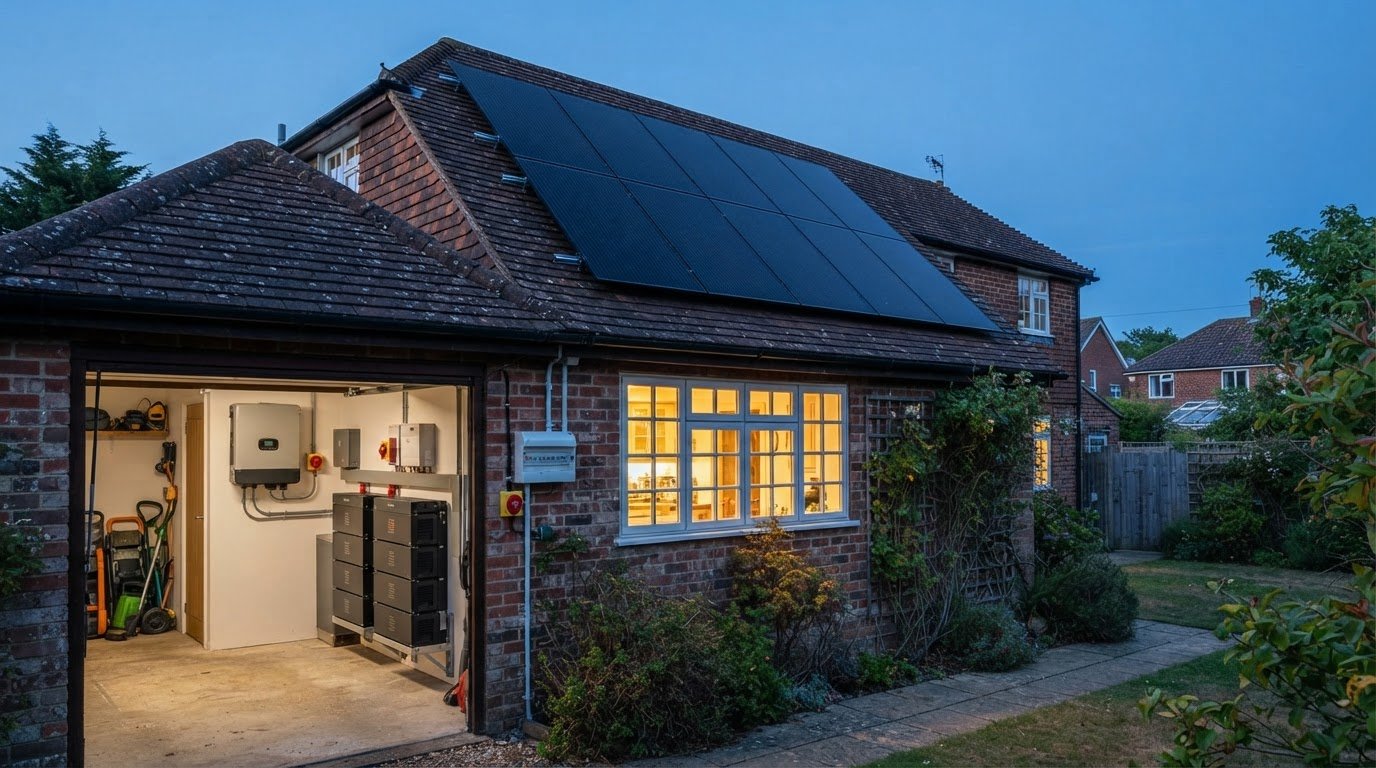
Home battery storage keeps electricity for later, rather than sending all surplus solar energy to the grid. A typical UK household battery holds between 5kWh and 13.5kWh. The usable capacity and connection method depend on the existing solar system and solar inverter.
Battery thermal management helps maintain suitable operating conditions. Lithium-ion batteries can discharge and provide power at temperatures as low as 0°C, but charging may slow below 10°C. Many prefer temperatures above 20°C to charge at full speed. Modern batteries generally manage their temperature internally. In colder parts of the UK, a utility room may suit better than an uninsulated garage.
Location also affects safety. PAS 63100 safety standards say domestic lithium batteries should not be installed in lofts or designated escape routes. A suitable position needs to accommodate the battery and its electrical connections without obstructing access or escape.
Installation involves assessing the existing inverter and system, positioning the battery, connecting it, then testing and handing it over. A professional installation, including testing and handover, usually takes one or two days. Battery systems involve high-voltage DC connections, so professional installation is recommended over DIY work.
Before installation, check system compatibility, a suitable battery location, safe electrical connections and the battery’s warranty terms. Also confirm how adding storage affects the existing inverter warranty. These details clarify what each warranty covers and what could affect it.
AC Coupled Battery vs Hybrid Inverter: What's the Difference?
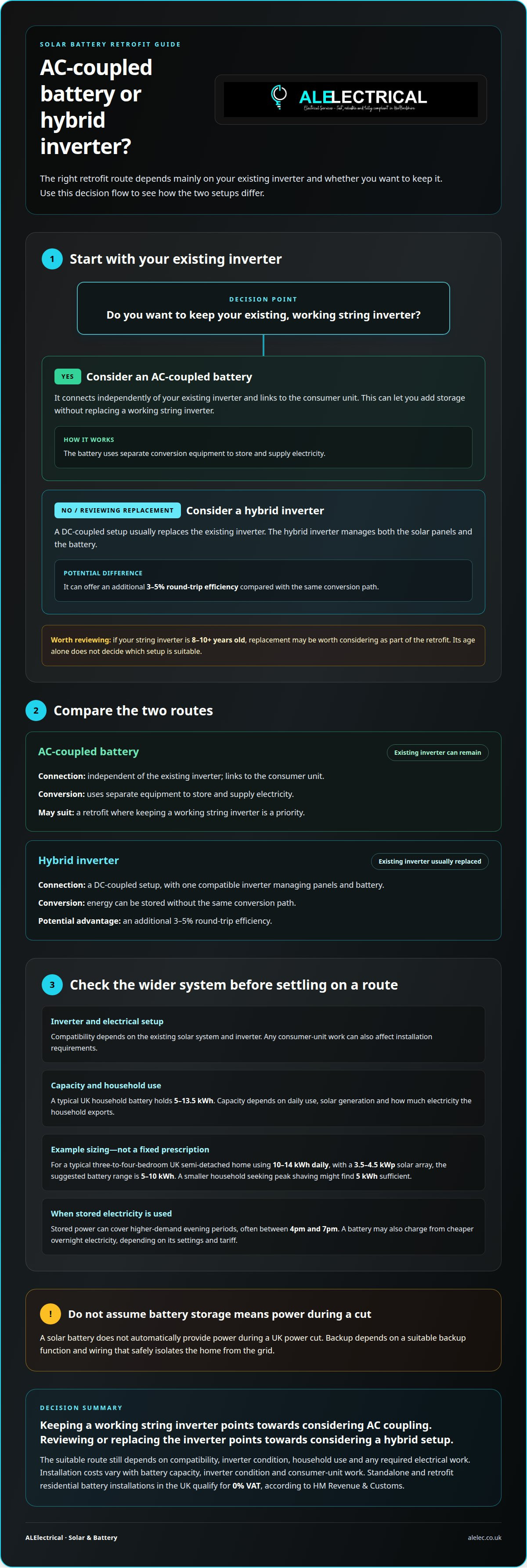
Retrofitting means adding storage to a solar system that was not originally designed for a battery. An AC-coupled battery connects independently of the existing inverter and links to the consumer unit. This can avoid replacing a working string inverter, although the battery uses separate conversion equipment to store and supply electricity.
A DC-coupled setup usually replaces the existing inverter with a hybrid inverter. This unit manages both the solar panels and battery, so energy can be stored without the same conversion path. It can offer an additional 3-5% round-trip efficiency. If a string inverter is 8-10+ years old, replacement may be worth considering as part of the retrofit.
Installation costs depend on the system, including battery capacity, the existing inverter’s condition and any required consumer-unit work. The equipment and electrical work affect the price, so request a quote based on your installation. Battery storage can also shift electricity use to cheaper tariff periods, but the value depends on household usage and tariff rates.
Standalone and retrofit residential battery installations in the UK qualify for 0% VAT, according to HM Revenue & Customs. This applies to the battery installation, not a guarantee of a particular overall price or saving. A suitable option starts with assessing the inverter and electrical setup. For help with a solar and battery installation, this assessment can clarify whether an AC-coupled battery or hybrid inverter best fits the existing system.
How a home battery stores and uses solar electricity
Solar panels generate electricity during daylight, and the inverter converts it for household use. When generation exceeds demand, a battery system can store the surplus instead of exporting it. Later, the battery releases that electricity through an inverter, helping power appliances after sunlight fades. With a hybrid setup, one compatible inverter manages both the panels and battery; an AC-coupled system uses separate equipment.
Capacity depends on daily use, solar generation and how much electricity the household exports. For a typical three-to-four-bedroom UK semi-detached home using 10-14kWh daily, with a 3.5-4.5kWp solar array, 5-10kWh is a suggested battery range. A smaller household seeking peak shaving might find 5kWh sufficient. These are examples, not a fixed prescription for every solar system.
Timing matters as much as capacity. Stored electricity can cover expensive evening periods, often between 4pm and 7pm, when household demand rises. For example, using battery power around the 5pm dinner rush can reduce reliance on grid electricity during that period. A battery can also charge from cheaper overnight electricity, depending on its settings and tariff.
A solar battery does not automatically provide power during a UK power cut. Backup depends on whether the system includes a suitable backup function and how it is wired to isolate the home safely from the grid.
Matching capacity, inverter type and household use makes adding a battery more straightforward. Arrange a solar and battery assessment to explore a suitable setup for your existing system.
ALElectrical: Solar & Battery
ALElectrical provides Solar & Battery installations for homeowners considering storage for an existing solar system. If you’re weighing an AC-coupled battery against a hybrid inverter, start by assessing how your current inverter and electrical setup affect the options. Request a free, no-obligation quote to discuss your installation.
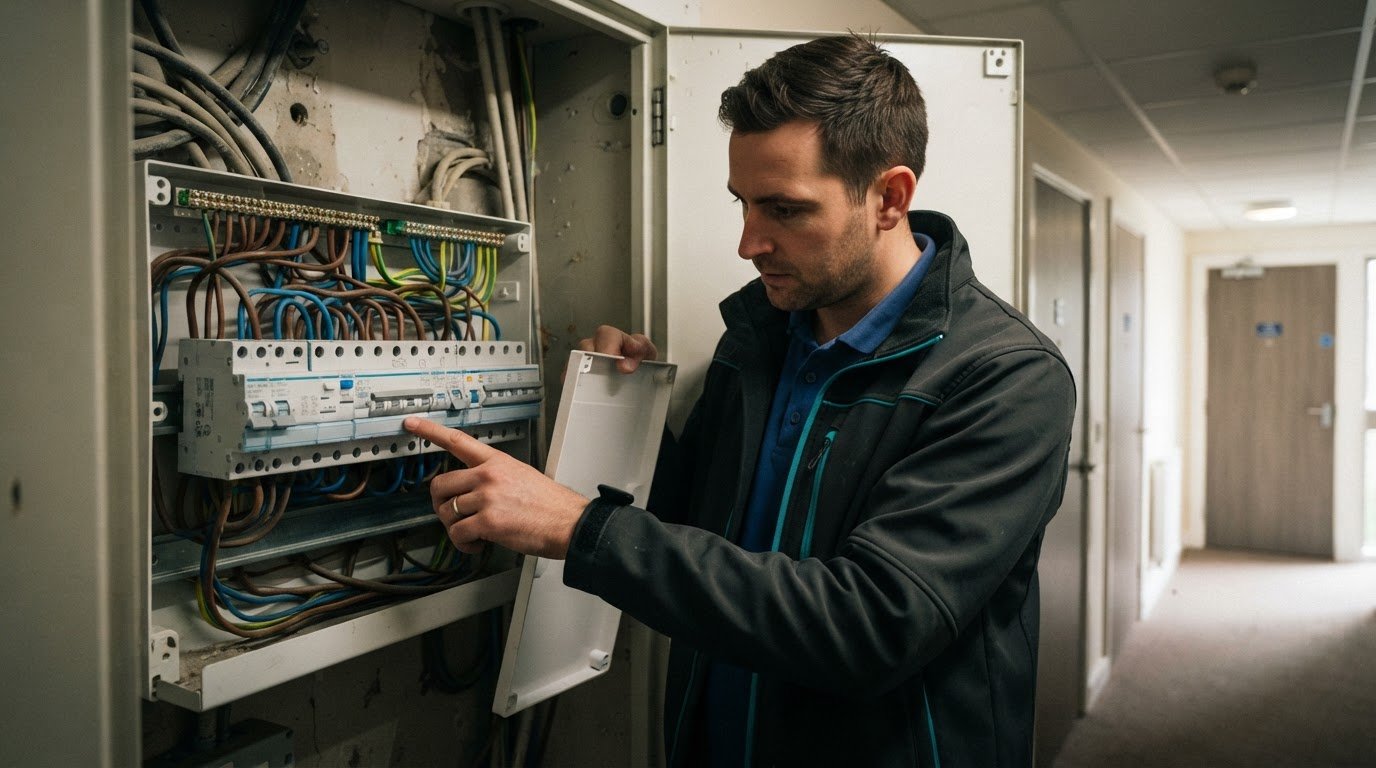
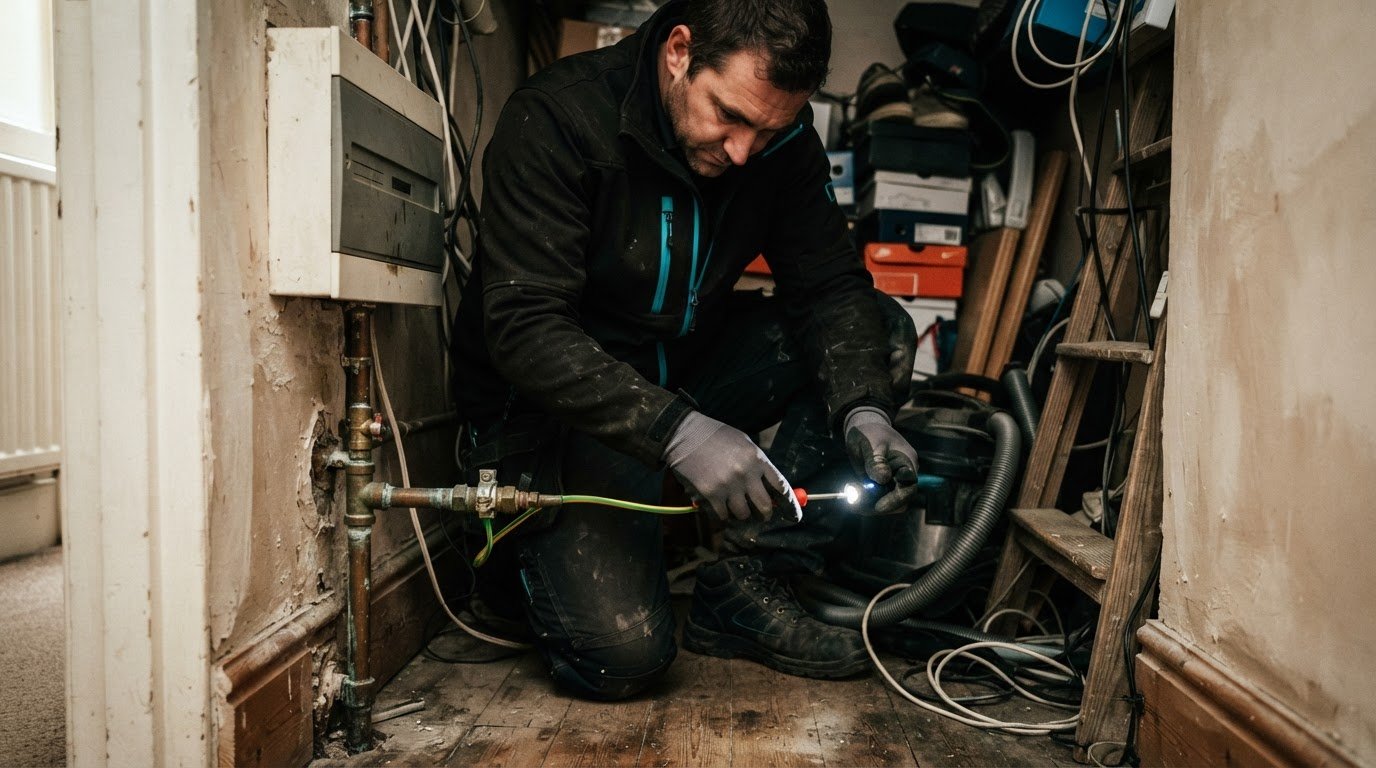
A battery installation also needs to suit your household’s electricity use and the space available for the equipment. Where the wider electrical system needs attention, Fuse Box Upgrades and EICR services may also be relevant. This keeps the decision focused on your existing installation, rather than choosing battery capacity in isolation.
Contact ALElectrical to discuss adding battery storage to your solar panels.
Plan your next step with confidence
If you’re still weighing whether you can add a battery to existing solar panels, focus on how you want your home to use electricity. Your priorities might include storing more daytime generation, shifting use around your tariff, or preparing for changes in household needs. Keeping that purpose clear can help shape a practical assessment of your system.
It’s helpful to think of the battery as part of your home’s wider electrical setup, not as a standalone purchase. An assessment can consider the existing solar equipment, available installation space and household requirements together. That gives you a clearer basis for deciding whether adding storage fits your plans.
For a discussion about your options, contact ALElectrical about solar batteries. A clear starting point can help you move towards a setup that makes sense for your home.
Frequently Asked Questions
Can I add a battery to my existing solar system?
Yes, in many cases you can add a battery to existing solar panels. Compatibility depends chiefly on the existing inverter and battery system design. An AC-coupled unit can work alongside a string inverter, while a compatible hybrid inverter can manage storage directly. Battery capacity should also suit your household’s electricity use and typical solar surplus.
Getting started: what does it cost and what can you save?
The installation price depends on your system and is provided in a quote. Key factors include battery capacity, inverter compatibility and any required electrical work. Potential savings depend on how much stored electricity replaces grid imports, your tariff and the value of electricity you export. Comparing those figures with your usage helps show whether storage fits your priorities.
How long does the installation take?
Adding a battery to an existing hybrid inverter typically takes 4-6 hours, while an AC-coupled retrofit is estimated at one day. The difference reflects the equipment and connections involved. The installer also needs time to test the system and explain its operation at handover, so the precise schedule depends on the chosen setup and installation work.
Will adding a battery void my warranty?
Warranty coverage depends on the terms for each part of your system. Read the clauses covering modifications, inverter compatibility and installation requirements, as these can affect panel or inverter cover. ALElectrical warrants its installation work to be defect-free for 12 months from the invoice date; this excludes goods it didn’t supply, physical damage and altered work.
What is the cheapest way to add a battery?
Using a compatible existing hybrid inverter can avoid replacing that unit, which may reduce the work involved. The lowest-cost option still depends on battery compatibility, capacity and any electrical upgrades needed. An AC-coupled system may suit a different inverter setup, so compare the complete installation requirements rather than choosing by battery size alone.
Comments