_.jpg)
How to Get an Electrical Safety Certificate: 2026 Guide
What if your next electrical inspection wasn't a source of anxiety, but a clear roadmap to a safer and more valuable home? Many landlords and homeowners feel a genuine sense of dread when booking an electrical safety certificate, often fearing hidden costs or an electrician who seems determined to find expensive problems. It's completely natural to feel overwhelmed by complex legal requirements or the worry that your property might fall short of current standards.
We're here to change that experience by providing a transparent, step-by-step process to help you understand, prepare for, and successfully obtain your certificate with total peace of mind. This guide explores everything you need to know about the EICR process in 2026, from initial preparation to receiving clear, honest advice on any necessary repairs. You'll discover how to navigate these safety checks whilst ensuring your home remains compliant, secure, and fully insured.
Table of Contents
Understanding the Electrical Safety Certificate (EICR)
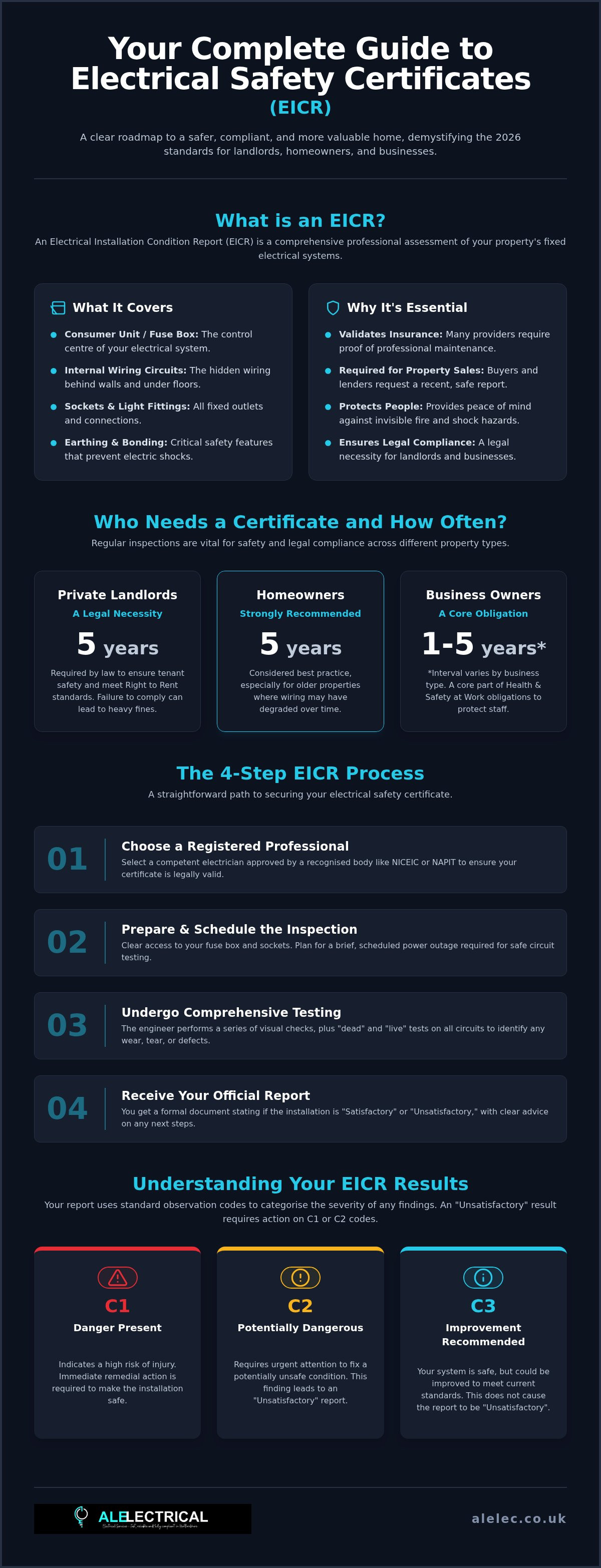
An Electrical Installation Condition Report, or EICR, is the formal document widely known as an electrical safety certificate. It's much more than a quick look over your shoulders. Think of it as a comprehensive professional assessment of your property's electrical health. This process involves rigorous testing of the fixed components that remain hidden behind walls or floorboards, including:
The consumer unit or fuse box
Internal wiring circuits
Plug sockets and light fittings
Earthing and bonding
Securing this certificate ensures your home insurance remains valid, as many providers require proof of professional maintenance. If you're selling a property, buyers and lenders will usually request a recent report to confirm the system is safe. Most importantly, it provides the reliability you need to know your family or tenants are protected from invisible hazards like fire or electric shocks.
Who Legally Requires an Electrical Safety Certificate?
For private landlords in the UK, an electrical safety certificate is a legal necessity rather than an optional extra. Regulations require landlords to have their properties inspected at least every five years to comply with Right to Rent standards and avoid heavy fines. These rules ensure that every tenant lives in a property that meets modern safety expectations.
Whilst not legally mandatory for all homeowners, a five-year interval is strongly recommended by experts. This is vital for older properties where wiring may have degraded over decades. For business owners, regular testing is a core part of meeting Health and Safety at Work obligations. It keeps your staff safe and ensures your commercial operations remain fully compliant with recognised safety standards.
How to Secure Your Certificate: A Step-by-Step Guide
Obtaining your electrical safety certificate is a straightforward process when you follow a logical path. First, ensure you choose a registered, competent electrician. Look for professionals approved by bodies like NICEIC or NAPIT, as this guarantees your certificate is legally valid and recognised by insurers and local authorities alike.
Once you've chosen a specialist, schedule the inspection for a time when you can manage a brief power outage. The engineer must test circuits whilst they're "dead" to ensure total accuracy and safety. During the visit, the engineer performs a series of visual checks alongside "dead" and "live" testing on all circuits, looking for signs of wear, tear, or specific defects that could pose a risk. Finally, you'll receive a digital or physical report. This document serves as your official electrical safety certificate, clearly stating whether your installation is "Satisfactory" or "Unsatisfactory". If you're ready to begin, you can book your professional EICR with a trusted team to get the process started.
Preparing Your Property for a Smooth Inspection
A little preparation goes a long way in ensuring the engineer can work efficiently. Start by clearing space around your consumer unit, sockets, and light fittings. If these areas are blocked by heavy furniture or storage, it can cause unnecessary delays and might prevent the engineer from checking specific circuits.
You should also unplug sensitive electronic equipment like computers or home cinema systems. High-voltage insulation resistance tests are a standard part of the process, and disconnecting these items protects them from potential damage. If you have any previous electrical records or certificates, keep them handy. Providing this history helps the engineer understand the property's background and can often speed up the assessment.
Managing Results: What Happens After the Inspection?
Receiving an "Unsatisfactory" report doesn't have to be a source of stress. This result simply means your engineer identified specific issues that require urgent remedial work to make the property safe. Once the assessment is finished, you'll receive a detailed breakdown of the findings. Choosing the same contractor to handle these repairs often streamlines the final sign-off, as they're already familiar with your system's layout. After the necessary work is completed, you'll be issued a "Satisfactory" report or a Minor Works certificate to confirm full compliance. ALElectrical provides transparent, no-obligation quotes for any necessary fuse box upgrades identified during the process, ensuring you have a clear path to your valid electrical safety certificate.
Understanding EICR Observation Codes (C1, C2, and C3)
The report uses standard codes to categorise the severity of any faults. A C1 code signifies "Danger Present," meaning there's a high risk of injury and immediate action is required. In these cases, the electrician may stay on-site to make the installation safe. A C2 code indicates the system is "Potentially Dangerous." This requires urgent attention and will automatically result in an "Unsatisfactory" report.
Finally, a C3 code means "Improvement Recommended." Your system is safe for continued use, but it doesn't meet the most recent electrical standards. For older properties with significant wear, a full house rewiring might be suggested to ensure long-term reliability. Recognising these differences helps you prioritise safety repairs whilst managing your maintenance budget effectively.
Securing Your Home's Future with Confidence
Managing the requirements for an electrical safety certificate doesn't have to be a daunting task. By understanding that an EICR is a vital health check for your property, you've already taken the first step toward a safer environment. We've explored how simple preparation and a clear understanding of observation codes can remove the mystery from the inspection process. Whether you're a landlord meeting legal duties or a homeowner seeking reliability, the right professional guidance makes all the difference.
Our NICEIC registered engineers specialise in expert EICR assessments and provide transparent, fixed-fee solutions for every client. You can book your professional electrical safety inspection with ALElectrical today to ensure your property remains compliant and secure. Taking care of your electrics today provides the peace of mind you deserve for years to come.
Frequently Asked Questions
How much does an electrical safety certificate cost for a standard home?
The cost of an electrical safety certificate depends on several factors, including the size of your property and the number of circuits that require testing. Larger homes with more complex installations typically require more time and technical work. We recommend requesting a transparent, no-obligation quote from a registered specialist to ensure you receive a fixed-fee solution tailored to your specific home.
How long does a professional EICR inspection take to complete?
A professional EICR inspection typically takes between two and four hours for a standard domestic property. This duration allows the engineer to perform thorough visual checks and rigorous electrical testing on all circuits. If your home is particularly large or features older, more complex wiring systems, the process may take a little longer to ensure every component is assessed with total precision.
What happens if my property fails the electrical safety test?
If your property receives an "Unsatisfactory" result, your engineer will provide a report identifying specific faults using observation codes. Issues marked as C1 or C2 require urgent remedial work to make the installation safe. Once these repairs, such as fuse box upgrades or wiring fixes, are completed by a competent professional, you'll receive a final document confirming your home is fully compliant and safe.
Is an electrical safety certificate a legal requirement for selling a house?
Whilst an electrical safety certificate isn't currently a legal requirement for selling a residential home in the UK, it's a vital tool during the conveyancing process. Most buyers and mortgage lenders will request proof of a recent inspection to confirm the property's wiring is safe. Providing a valid report can prevent delays, protect your liability, and offer potential buyers total peace of mind.


Comments